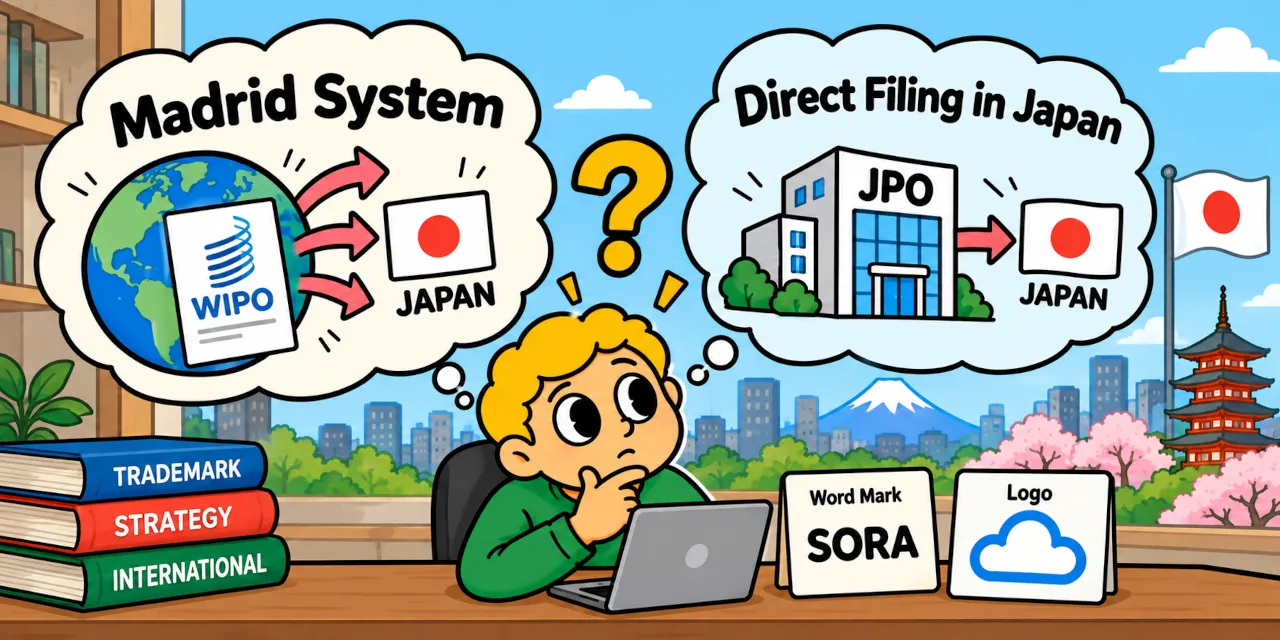
If you are expanding your brand into Japan, the Madrid System offers a practical route to trademark protection. The ability to seek protection in multiple countries and centrally manage renewals and changes in ownership can be valuable for an international business.
Before designating Japan, however, consider one question:
Is the mark in your international registration the one you actually want to use and protect in Japan?
This question applies both when filing a new international application and when adding Japan to an existing international registration through a “subsequent designation.”
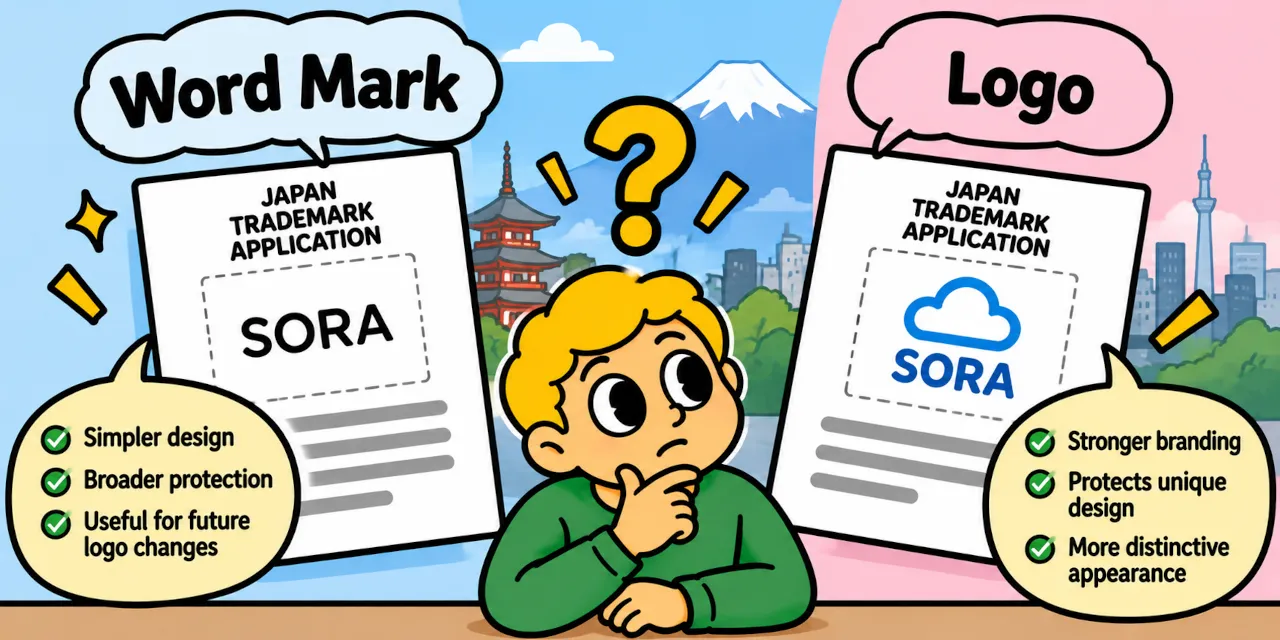
In Japan, a brand may use a katakana or hiragana name alongside its original Latin-letter name. A business may also adapt the wording within its logo for the Japanese market.
Before comparing the costs and procedures of the Madrid System with a direct Japanese application, it is therefore important to decide which trademark—or trademarks—you need to use and protect in Japan.
- You Cannot Change the Mark Specifically for Japan
- Pronunciation and Brand Impressions May Change in Japan
- Does a Latin-Letter Registration Also Protect Katakana?
- Symbols Without Wording Present a Different Situation
- For Logos Containing Words, Check Your Planned Japanese Use
- The Madrid System and Direct Filing Can Be Used Together
- Do Not Let Priority Determine Your Japanese Brand Form
- Consider How the Name Works in Japan
- Start with the Brand You Intend to Build in Japan
You Cannot Change the Mark Specifically for Japan
The Madrid System allows you to seek protection in multiple countries based on a trademark application or registration at your Office of origin. You do not necessarily have to wait for that application to become a registration.
The mark in the international application must match the mark in the basic application or registration. Once internationally registered, the mark itself cannot be amended.
For example, if your international registration covers a Latin-letter name, you cannot replace it with katakana specifically for Japan. Nor can you substitute a version of your logo with katakana added. The same applies when adding Japan through a subsequent designation.
If you want to register a different version for Japan, you will need to consider a separate application for that version. A direct Japanese application is one option.
The Madrid System is designed to protect and manage the same mark across multiple countries. Whether you intend to use that same mark in Japan is therefore an important starting point when choosing your filing route.
Pronunciation and Brand Impressions May Change in Japan
A name that people readily pronounce in your home market may not be read the same way in Japan. Japanese consumers may interpret Latin letters using English pronunciation, Japanese romanization conventions, or familiar words. The resulting pronunciation may differ from the one you intended.
Rendering a name in katakana can also change its sound, rhythm, and length. A name with a positive meaning in its original language may have no clear meaning in Japan—or may bring an unrelated Japanese word to mind.
Whether to retain the Latin-letter name, add katakana, or use the visual character of hiragana depends on your customers, products or services, and intended brand image. The goal is to decide how Japanese customers should recognize your brand.
For more on these choices, see Choosing Between Latin Letters, Katakana, and Hiragana for Your Trademark in Japan.
Does a Latin-Letter Registration Also Protect Katakana?
A Japanese registration for a Latin-letter mark may provide some protection against a corresponding katakana mark.
In Japan, trademark similarity is assessed by considering appearance, pronunciation, and meaning, together with relevant circumstances. Marks written in different scripts may still be considered similar, for example because they produce the same pronunciation.
However, three separate questions need to be distinguished.
1. Can Your Rights Extend to Someone Else’s Katakana Mark?
If another party uses a katakana mark that is similar to your registered Latin-letter mark, you may be able to stop that use, provided the relevant requirements—including those concerning the goods or services—are met.
However, Japanese consumers will not necessarily recognize your intended pronunciation. Your own intention that “these letters should be pronounced this way” does not, by itself, determine the scope of your rights.
2. Have You Registered the Katakana Version Itself?
Having rights that may extend to a similar katakana mark is different from holding a registration for that katakana version.
If katakana will be a principal form of your brand name in Japan, it may be worth conducting a search and considering a separate registration for that version.
This does not mean every business needs to register both versions. The decision should reflect your actual use, the commercial importance of each version, and your budget.
3. Can Katakana Use Maintain Your Latin-Letter Registration?
In Japan, a registration may be cancelled for the relevant goods or services at a third party’s request if the registered mark has not been used in Japan for three consecutive years or more. This procedure is known as a non-use cancellation action.
For this purpose, qualifying use can include use of a mark considered identical to the registered mark under accepted social standards. Japanese law expressly includes certain changes between hiragana, katakana, and roman letters where the marks produce the same pronunciation and meaning.
However, being similar and being sufficiently identical for non-use purposes are different tests.
For example, if your chosen katakana version differs from the pronunciation Japanese consumers would naturally derive from the Latin-letter mark, the pronunciation requirement needs careful consideration. Matching pronunciation alone does not necessarily establish the required identity either.
If you plan to register a Latin-letter mark but use only katakana in Japan, you should therefore check whether that use would be sufficient to maintain the registration.
Symbols Without Wording Present a Different Situation
These script issues do not affect every trademark to the same extent.
If your mark is a symbol or graphic without wording, and you intend to use it in exactly the same form in Japan, there is normally no need to consider replacing Latin letters with Japanese characters.
From the perspective of adapting the mark’s wording for Japan, there is less reason to avoid the Madrid System and file separately in Japan. Using the same symbol across countries is a situation in which centralized management can be particularly useful.
You will still need to consider Japanese registrability requirements and the goods or services to be covered. Language differences alone, however, do not necessarily justify a separate Japanese filing for an unchanged symbol.
For Logos Containing Words, Check Your Planned Japanese Use
If your logo combines wording and a graphic, consider whether you will use the entire logo unchanged in Japan.
For example, you might use a symbol with a Latin-letter name overseas but replace the wording with katakana in Japan. That changes the composition of the mark. You cannot substitute the Japanese version specifically for Japan within the existing international registration.
By contrast, retaining the original logo and providing a katakana pronunciation in surrounding product descriptions or advertising raises different considerations from changing the logo itself.
You should also consider whether the name or symbol will be used independently. Registering the complete logo and registering its wording or graphic separately protect different subject matter.
Clarifying how you intend to use each element in Japan will help you decide which registrations are needed.
The Madrid System and Direct Filing Can Be Used Together
You do not have to choose one filing route for every version of your brand.
For example, you could designate Japan under the Madrid System for your global Latin-letter name or symbol, while filing directly in Japan for a katakana name or a locally adapted logo.
Alternatively, if you intend to use the same name or logo worldwide and that registration would provide the protection you need, designating Japan under the Madrid System may be a sensible choice.
Costs and procedures matter. However, comparing filing fees alone is not enough when the applications would protect different versions of your brand.
First identify the marks you need to protect. Then choose the filing route, taking account of your target countries, administrative needs, and costs.
Do Not Let Priority Determine Your Japanese Brand Form
If you have already filed abroad, you may be able to claim priority from that application in Japan. However, changing the wording or logo for Japan may mean that the new version is not entitled to that priority.
The important point is to avoid changing your intended Japanese trademark simply to preserve a priority claim.
Unlike patents and designs, trademarks do not become unregistrable for lack of novelty merely because you have publicly disclosed or used the name. Even if priority is unavailable, you can still file a separate application for the Japanese version.
Earlier third-party applications remain a concern. Use priority where it is available, while proceeding promptly with the necessary searches and filings once your Japanese version has been chosen.
You can also work in parallel—for example, securing protection for your established global mark while considering the appropriate Japanese wording—rather than waiting until every branding decision is complete.
Consider How the Name Works in Japan
Our Japan Brand Fit Check provides a qualitative assessment of factors such as readability, pronunciation, memorability, meaning, and associations from a Japanese language and market perspective. It supports decisions about the name and wording you use in Japan and is separate from a trademark search assessing registrability.
The service is currently available in connection with trademark filing inquiries. Please see our Japan Brand Fit Check service page for details of its scope.
Start with the Brand You Intend to Build in Japan
Will you use the same Latin-letter name in Japan? Will katakana or hiragana become the principal name? Will you change the wording within your logo? Or will you use an unchanged global symbol?
Your answers determine which trademarks you need to protect.
The Madrid System may be suitable where you will use the same mark in Japan. A direct Japanese application can address a different local version. A combination of the two may fit your business best.
First decide which form of your brand you want to use and build in Japan. Then choose the filing route that protects it.
That sequence connects your trademark filings with your brand strategy for the Japanese market.